For every child who does better knowing what's coming
Your child's day, told as a story they can hold on to.
A picture of the ForeTale app: the Create a story screen, filled in for the story on the next pages.
Who is this story for?
 Harry
Harry
Who else is in the story?
Tap the people who appear. Tap again to remove.
 AlbertLittle brother
 Dad (selected)
 Mum
Mum Nanny
Nanny Nanny JacNanny
 Grandad
Starring Harry, with Dad.
What's the situation?
Harry and Dad are going to the park, but it might rain. If it does, they'll play board games at home instead.
The more you describe — where it happens, what's tricky, what helps — the closer the story will fit your child's real moment.
The story ForeTale made, page 1 of 5.

When the Park Plan Changed
Harry and Dad planned to spend the afternoon at the park. Harry had been looking forward to it since morning. Plans like this usually go ahead, but sometimes the weather has other ideas.
The story ForeTale made, page 2 of 5.

Just as they were about to leave, Dad looked out the window and saw rain starting to fall. The park would be wet and slippery, so going was no longer a good idea. Harry felt disappointed, since the trip had been something to look forward to.
The story ForeTale made, page 3 of 5.
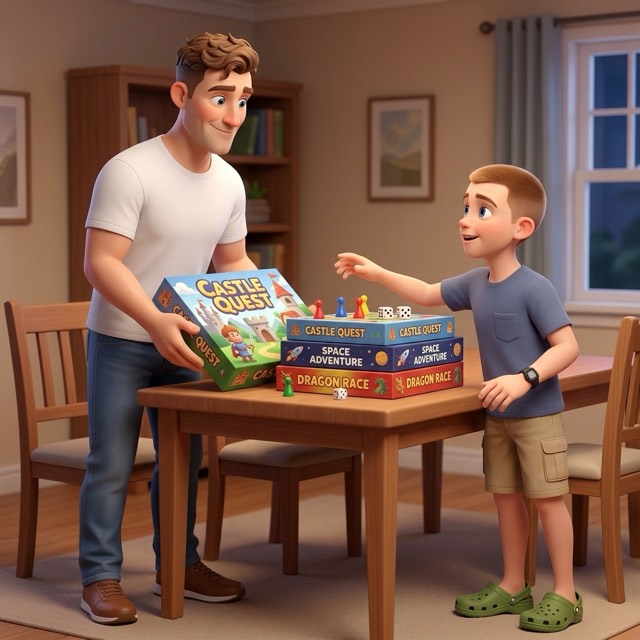
Dad went to the cupboard and brought out a stack of board games instead. The boxes made soft thudding sounds as they landed on the table. Harry could choose a favorite game to set up on the table.
The story ForeTale made, page 4 of 5.
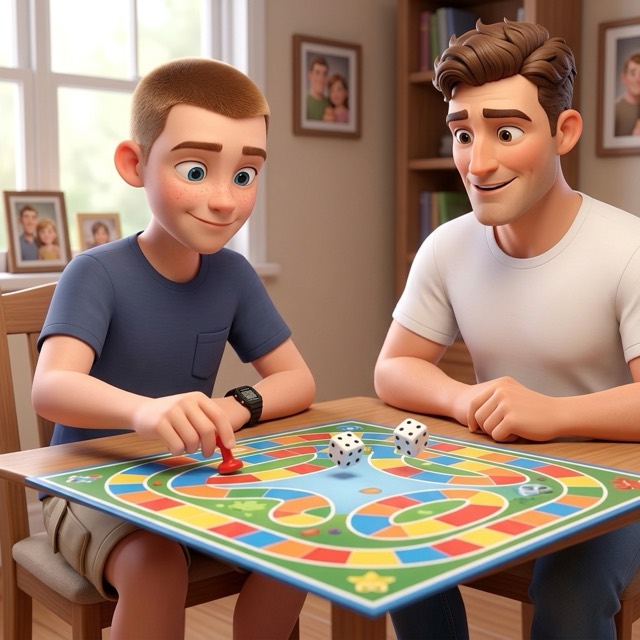
At first Harry still felt a little unsure, missing the idea of being outside. Once the game began, the dice rolled and the pieces moved around the board with satisfying little clicks. Harry's disappointment slowly faded as the game became more fun than expected.
The story ForeTale made, page 5 of 5.

By the end of the afternoon, Harry was laughing and asking for another round. The rain outside kept falling, but the games made the day feel good anyway. Plans can change sometimes, and a different kind of fun can still be found.
Tell ForeTale what's coming up. It makes an illustrated story starring your child and the people they know — you read every page first, then it's waiting in their day.
Coming soon to the App Store
Coming soon to Google Play
Ready when the day comes
The story is there when they need it.
You read every page first. When you're happy, put the story into their day — morning, afternoon or evening. In Child Mode, it's waiting for them when the moment comes.
You read it first
Every page, before your child sees it. Change any words, ask for new text or a new picture, then approve it. Your child only sees stories you approve.

By the end of the afternoon, Harry was laughing and asking for another round. The rain outside kept falling, but the games made the day feel good anyway. Plans can change sometimes, and a different kind of fun can still be found.
Page 5 of 5
Put it in their day
Pick the part of the day it belongs to — morning, afternoon or evening — and it goes on the calendar you both see.

Put it in the day
When the Park Plan Changed can run once or become part of the routine. Pick a starting spot — you and your child will see it on the day, and you can set exact times and repeats in the calendar.
Will appear — Today afternoon.
It's waiting for them
Child Mode shows your child their day and only the stories you've approved — so the story is right there when the moment comes. Leaving Child Mode takes your PIN.
 ForeTale
9:41 AM
ForeTale
9:41 AM
Saturday, October 3rd
Harry's plan for the day
Morning
Afternoon
When the Park Plan ChangedEvening
Same faces, every story
The people in the pictures are the people in your child's life.
Describe your child and the people around them once — and ForeTale keeps everyone looking like themselves in every story. This is one real family's cast: Harry, his brother Albert, Mum, Dad, Nanny, Nanny Jac and Grandad — the same family you'll see throughout this page. No photos, ever.
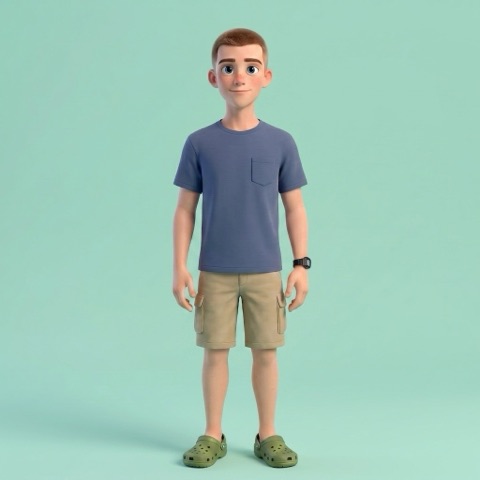
Harry
The star

Albert
Little brother

Dad
Dad

Mum
Mum

Nanny
Nanny

Nanny Jac
Nanny

Grandad
Grandad
How it works
Describe a moment. Get a story. Add it to the day.
Build your family
Add your child and the people around them. Choose how each person looks — no photos needed, ever.
Describe the moment
A dentist visit, a change of plans, bedtime. ForeTale writes a five-page illustrated story about it — starring your child, in about a minute.
Review, then add it to the day
You read and approve every page before your child sees it. Then place it in the daily routine, so it's waiting just before the moment comes.
Made for real moments
Start with what's hard this week.
New places — here's a real story about one: “Going to the Dinosaur Exhibition.” Every story is written to suit your child's comprehension level.

Today Harry is visiting the Dinosaur Exhibition with his family. The exhibition is in a large building that Harry has not been to before. Mum, Dad, and his brother Albert are all coming along too. Albert has been talking about dinosaurs all week and is very excited.

First, the family will walk through the entrance and get their tickets checked. There might be a line of other visitors waiting to go inside. Harry may hear echoey voices and see signs pointing toward different dinosaur rooms. Harry can hold onto the map if he wants something steady to look at while he waits.
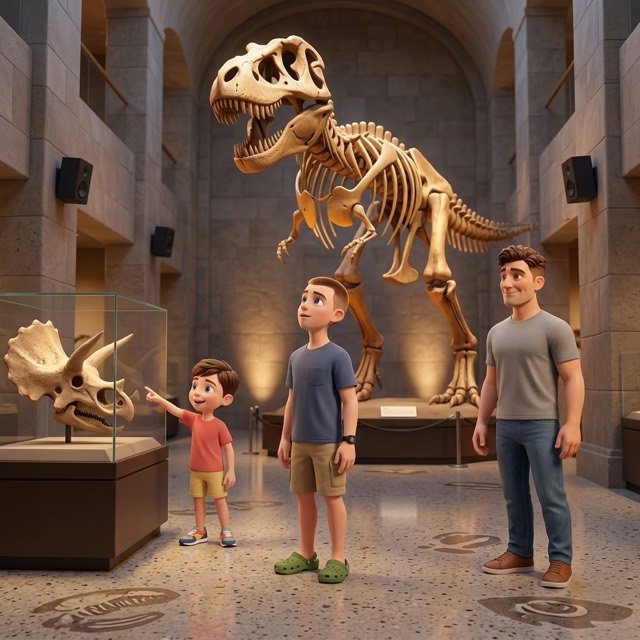
Inside the main hall, tall dinosaur skeletons stand under bright lights. Some displays make low rumbling sounds or dinosaur roars through hidden speakers. The room smells a little like polished floors and fresh paint. Albert runs ahead to look at a huge dinosaur skull, pointing and laughing.
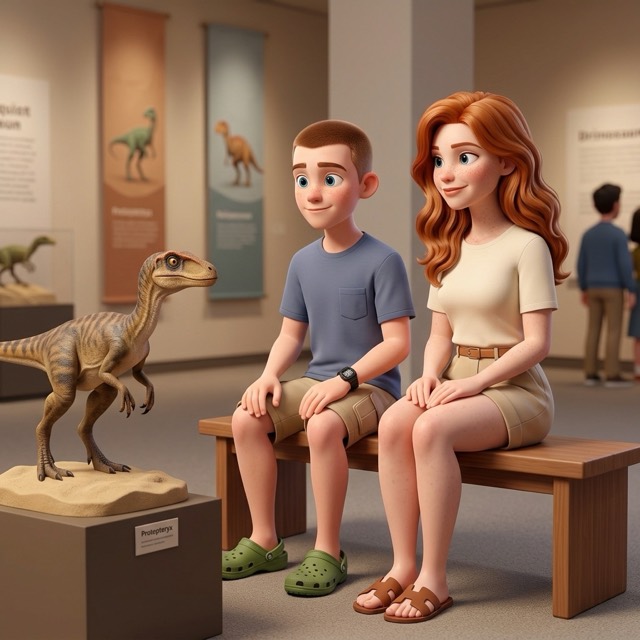
Harry might feel excited about the dinosaurs and a little unsure about the loud sounds. Both feelings can happen at the same time, and that is completely normal. Mum stays nearby and notices how Harry is doing as they walk through the hall.

By the end of the visit, Harry will have seen many different dinosaurs up close. The whole family can talk about their favorite parts on the way home. Harry might feel proud of exploring somewhere new with his family.
How are you feeling?
After each story, one gentle check-in. No scores, no graphs — just what your child tells you.
The whole story as ForeTale wrote it — with the feelings check-in on the last page.
Why social stories work
Read the headings. They carry the whole argument.
Not knowing is the hard part
Most autistic children aren't frightened of the dentist. They're frightened of the unknown dentist — the one they can't picture yet. Around 4 in 10 autistic children meet the criteria for an anxiety disorder, and researchers link much of it to intolerance of uncertainty. A social story shows your child what's about to happen, so that when it does, they already know what it looks like.
Read it before. Not after.
Stories work best read just before the thing happens — the morning of the dentist, in the car outside the party. It's why ForeTale has a calendar: put a story on the day it belongs to, and it'll be waiting when you need it.
Not every story is about a problem
The stories that get read most are about ordinary days: bedtime, feeding the dog, getting dressed. A story about something your child already does well keeps it steady — and tells them these stories aren't only for when something's gone wrong.
The classroom got there first
If your child has a resource teacher, an aide, or a speech therapist, there's a fair chance they already use social stories. In one survey of teachers using them, 93% said they found them effective — most often for exactly what you're probably here for: changes and new routines.
You don't need to be a therapist
A recent review pooled 21 studies and asked whether it mattered who read the story to the child — a therapist, a teacher, or a parent. It didn't. Parents got the same results. You know your child better than anyone who'd be reading it instead.
A story describes. It doesn't instruct.
Every story ForeTale writes is mostly description — what happens, what it looks like, what people might be feeling. At most one gentle suggestion per story, never a command. No “you should.” No “good children do.” Nothing that tells your child there's a wrong way to be them.
Give it two or three weeks
In studies, a child usually reads the same story around six times across a few weeks. If it isn't landing by then, the fixes are usually small: read it closer to the event, shorten it, or check the pictures look like the place you're going.
It helps a lot of children. Not all of them.
We'd rather you heard this from us. Research on social stories is encouraging and growing, but not every story works for every child — and almost none of the evidence follows children long-term. They are a support, not a treatment, and not a cure.
Social stories are a support, not a treatment. You know your child — use what works and leave the rest.
A safe place for your family's story.
ForeTale is built for one of the most personal things a family owns: what your child finds hard, and who they love. We treat it that way.
- No ads and no third-party tracking. We never sell your family's information.
- Stories are written and illustrated with the help of AI. ForeTale asks your permission before any of your family's details are shared with the AI services that create them. How ForeTale uses AI
- No photos required — characters are illustrated, not photographed.
- Children never sign in, and child mode is PIN-locked.
- You review and approve every story before your child sees it.
- Delete everything from inside the app, any time.
The next hard moment doesn't have to be a surprise.
Your first 2 stories are free — and you can make the first one before creating an account.
Coming soon to the App Store
Coming soon to Google Play